

Water and wastewater utilities, desalination plants, and industrial pump stations across the region share the same core challenge: keeping pumps running reliably, efficiently, and safely, 24 hours a day, often across widely distributed sites with limited on-site staff. Pumping systems are not a minor line item in this equation industry research indicates they account for close to a fifth of the world's electrical energy demand, and a quarter to half of total electricity use within industrial facilities specifically. When pump control is handled with fixed-speed starters and manual monitoring, the result is predictable wasted energy, premature motor wear, and faults that aren't caught until a pump has already failed.
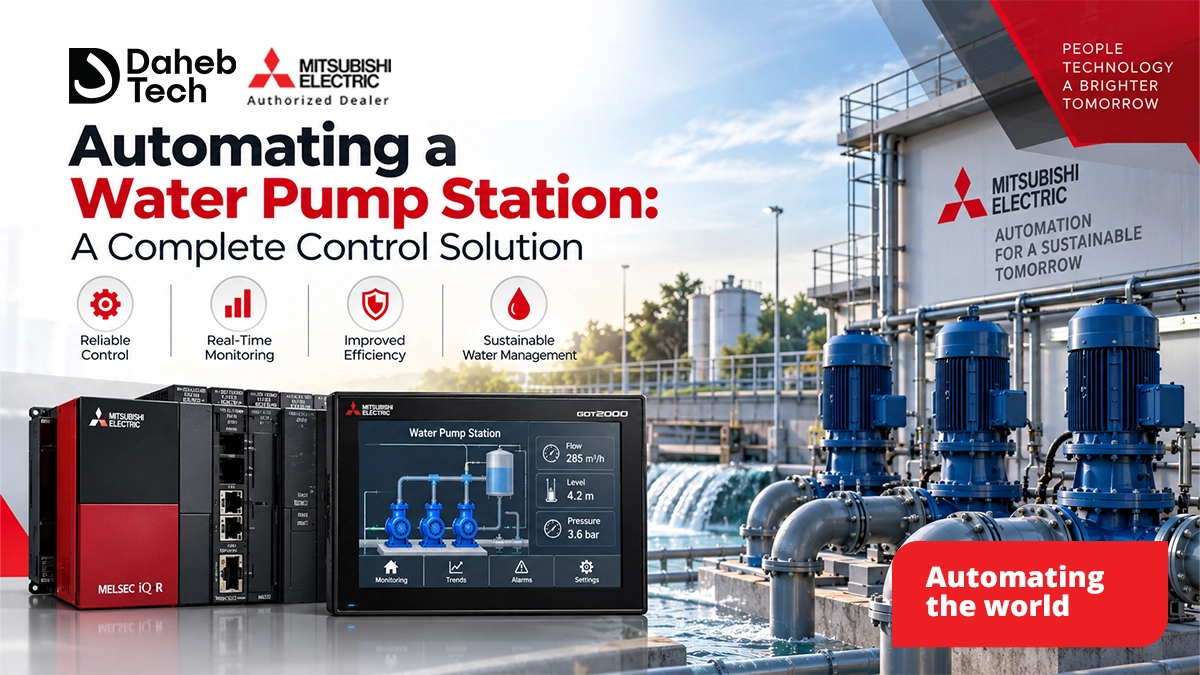
This is a breakdown of how a complete pump station control solution comes together using Mitsubishi Electric hardware not as separate products, but as one coordinated system, the way it would actually be specified and commissioned on a real site.
A typical pump station whether it's a municipal water booster station, a desalination intake pump, or an industrial cooling water system has to solve several problems at once:
Solving these individually, with a fixed-speed starter here and a standalone monitoring panel there, leaves gaps. A coordinated control architecture closes them.
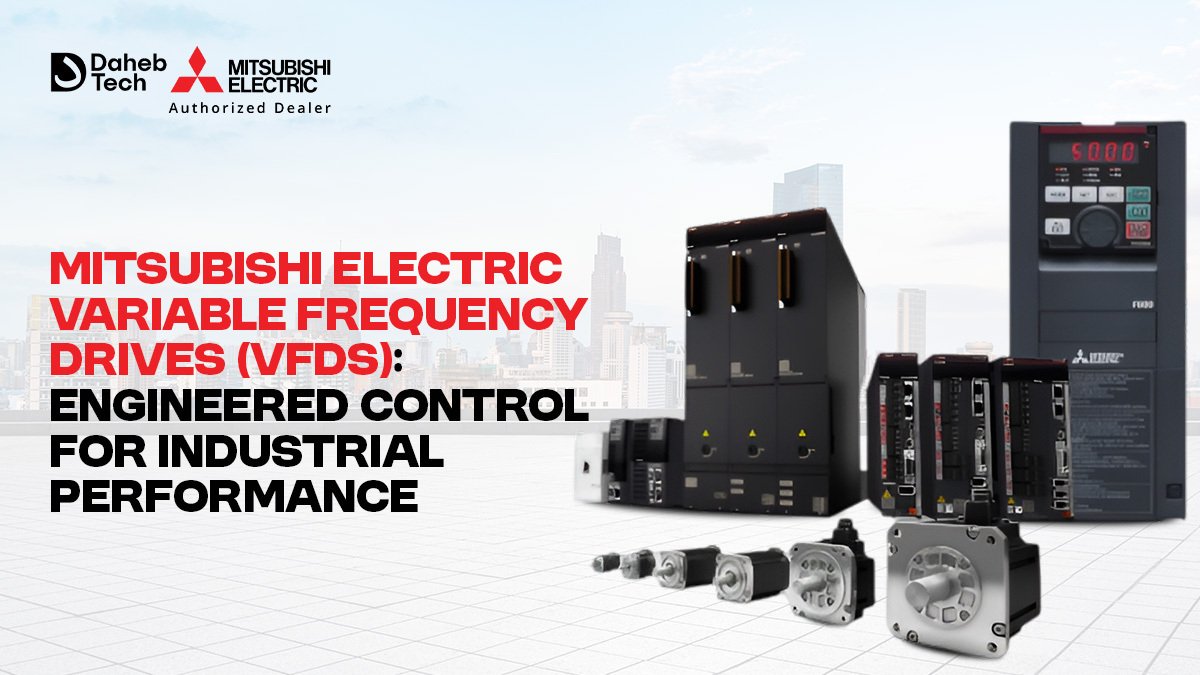
At the center of the system is variable frequency drive control on each pump motor. Rather than running pumps at fixed full speed and throttling flow mechanically, the FR-F840 purpose-built for pumps, fans, and building service equipment adjusts motor speed electronically to match real-time flow and pressure demand. This is the single highest-impact element of the whole architecture: because pump power draw scales roughly with the cube of speed, even moderate speed reduction during low-demand periods delivers substantial energy savings, while also reducing mechanical stress that shortens pump and motor life under constant full-speed operation.
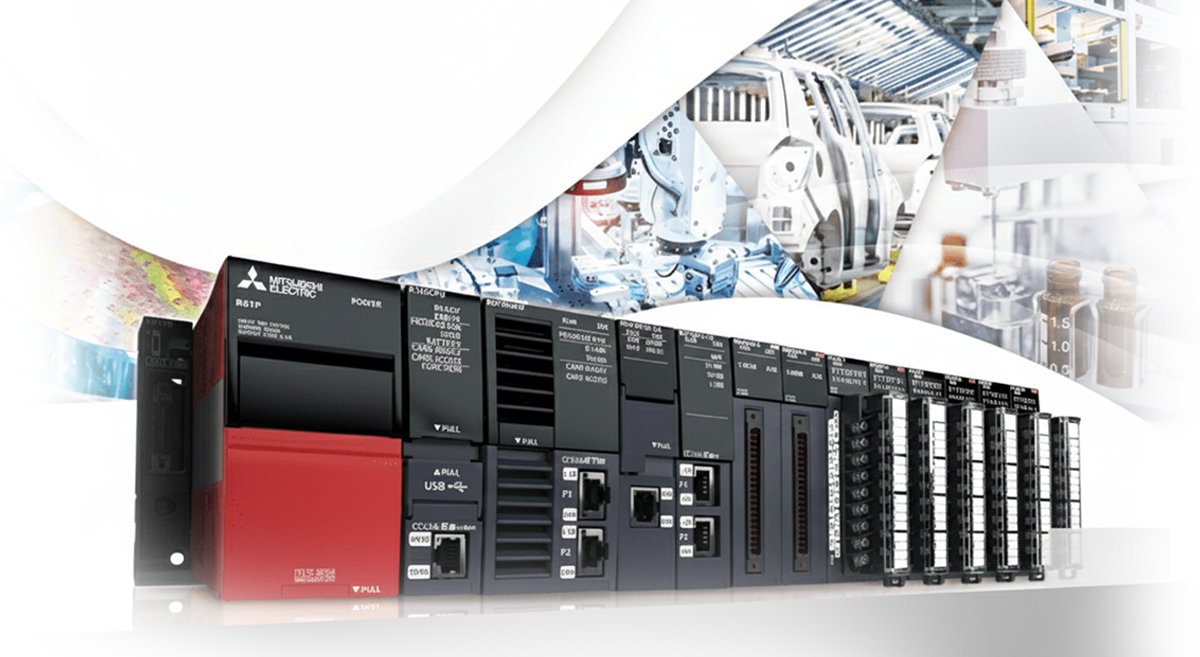
A PLC coordinates the station as a whole sequencing multiple pumps, managing lead/lag rotation to balance wear across units, responding to level and pressure sensor inputs, and handling alarm logic. For a station of this scale, a controller from Mitsubishi's MELSEC platform provides the processing headroom and I/O flexibility to manage multiple pumps, instrumentation points, and communication links from a single coordinated logic layer, rather than each pump operating in isolation.
Even in a lightly staffed pump station, operators need a clear, immediate view of system status when they are on site and a way to catch developing problems remotely when they're not. A GOT HMI at the station provides real-time trending of flow, pressure, and pump status, with alarm thresholds that flag developing issues a slowly rising motor current, an unusual vibration pattern before they become a failure. This is the same diagnostic data foundation behind predictive maintenance: the VFD and PLC are already generating the data; the HMI is what turns it into something an operator can act on.
None of the above matters if the electrical supply to the station isn't protected and coordinated. A properly engineered low-voltage power distribution system ensures that a single fault a motor overload, a short circuit on one pump circuit trips only the affected circuit, rather than taking the entire station offline. For multi-pump stations, this selectivity is what keeps the rest of the system running while a single unit is isolated for repair.
The value of this architecture isn't any single component it's the coordination between them:
This is the difference between a collection of automation products and an actual automated system each layer depends on and reinforces the others.
This architecture scales a small booster station might need a compact controller and a single VFD, while a large desalination intake facility may need multiple coordinated pumps, redundant control paths, and a more extensive power distribution design. The right starting point depends on the number of pumps, the criticality of continuous operation, and how the station is currently staffed and monitored.
Does this require replacing existing pumps?
Usually not. In most retrofits, the existing pump and motor stay in place the VFD, PLC, and monitoring layer are added around them. Replacement is only needed if the pump itself is undersized, worn beyond serviceable condition, or mismatched to current flow requirements.
What size pump station is this architecture suited for?
It scales in both directions. A small booster station may need only a single VFD and a compact controller, while a large multi-pump facility benefits from full lead/lag sequencing, redundant control paths, and a more extensive power distribution design the underlying architecture is the same, just sized to the site.
How long does it take to retrofit an existing pump station with this system?
It depends on the number of pumps and whether the existing electrical infrastructure needs upgrading alongside the control system, but a single-pump retrofit with an existing panel can often be completed in days to a few weeks, while a multi-pump station with new power distribution work extends over a longer commissioning schedule.
Can this system run pumps automatically without an operator present?
Yes that's a core part of the design. The PLC handles sequencing, lead/lag rotation, and fault response automatically, while the HMI and alarm layer are what allow a remote or lightly staffed team to monitor status and respond only when something actually needs attention.
What happens if a VFD or the PLC itself fails?
A well-designed system includes fallback logic for example, a failed VFD can often be bypassed to run its pump at fixed speed temporarily, and critical alarms can be configured to alert staff even if the primary HMI is unavailable. The specific failover approach should be defined during design based on how critical continuous operation is for that site.
Does adding this level of automation increase cybersecurity risk for the station?
Any networked control system introduces some exposure, but it's manageable with standard practices network segmentation, restricting remote access to authenticated connections, and keeping firmware updated. This should be addressed as part of the system design, not treated as an afterthought once the station is already running.
Daheb Tech's technical team can assess your existing pump station setup or a new site under design and specify a control architecture matched to your actual flow, pressure, and staffing requirements. Get in touch or explore our full product range.